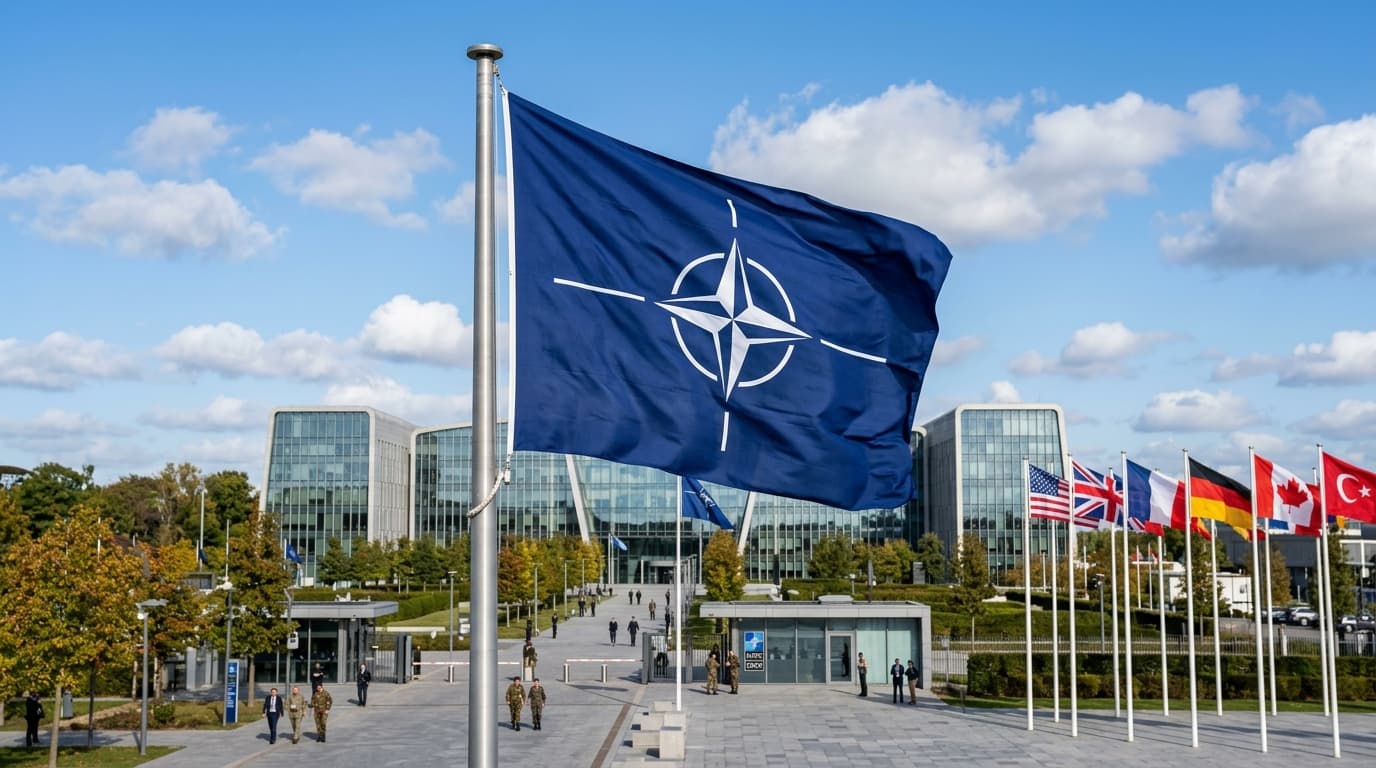

The US, together with Israel, has launched a war against Iran. This has not only pushed the Middle East to the brink of chaos but also created a massive rift across the Atlantic. When Washington asked its European allies to send troops to the Strait of Hormuz, countries like Britain, France, Germany, Italy, and Spain refused, stating that "this is not our war." Some even resisted by restricting US access to their military bases and airspace.This betrayal at the threshold of war has escalated the superficial friction over Greenland into a fundamental sense of alliance betrayal. It marks a point of no return for NATO, pushing this transatlantic bond dangerously close to a "de facto dissolution."
Structural Rifts in NATO Driven by the Restructuring of US Hegemonic Logic
The arrival at this tipping point is no accident. It stems from a disruptive restructuring of the global order and alliance systems by the United States.First, America's core national security interests are now firmly pivoted toward the Western Hemisphere and the Indo-Pacific, strategically marginalizing traditional Euro-Atlantic security and defense. Second, the US is undergoing a fundamental realignment of its traditional alliances. Under the Trump administration's logic, NATO is no longer an equal partnership based on shared values, but a highly asymmetrical structure of dependency between the strong and the weak. Believing it has borne disproportionate long-term security costs, the US has repeatedly raised its demands, pressuring all NATO members to hike their defense spending targets to 5% of their GDP.
The rift runs even deeper. The US is coldly redefining its unilateral hegemony in a "pre-modern" way, turning the alliance system into a one-way tool that serves only American interests—maintaining its global dominance while shaking off external constraints. In stark contrast, European nations hope to uphold the multilateral aspects of the post-war international order. With such diametrically opposed strategic goals, the breaking of the transatlantic bond has become inevitable. Trump views the European allies' refusal to join the war against Iran as an "absolute betrayal" and has warned of political retaliation. As the US humiliates and undermines Europe's political subjectivity through tariff threats, intimidation over territorial annexation, and support for the far-right, NATO—an alliance originally designed to defend against "external threats"—is disintegrating from within, its political consensus and foundation of trust gradually hollowed out.
Europe's Inability to Escape "Security Parasitism" on the US
Although Europe has shown unprecedented resistance to American unilateralism and hegemonic maneuvers on the political and diplomatic fronts—even brewing contingency plans for a "European NATO"—this political awakening cannot mask a stark reality: Europe remains heavily parasitic on the US military system for its defense.Within NATO, the United States retains absolute dominance in military intelligence systems, geospatial intelligence, as well as space, cyber, and positioning capabilities. In an era of rapidly accelerating military AI, without American intelligence feeds, GPS positioning, and underlying algorithmic support, Europe's existing tactical data link systems would be reduced to isolated information silos.
Regarding missile defense interception and air defense early warning, Europe not only relies heavily on US-made land-based "Patriot" and sea-based "Aegis" systems for terminal interception, but also depends on the US as the sole provider of exo-atmospheric mid-course interception capabilities.In terms of rapid reaction capabilities and large-scale maneuver expeditions under constant readiness, Europe's long-standing infrastructure deficits and fragmented regulations have left its local support capabilities stretched thin, making it absolutely dependent on the US military's strategic transport and logistics support systems.
On the defense supply chain front, despite a surge in European defense spending—expected to reach 392 billion euros in the 2026 fiscal year—structural hollowing-out of local production capacity means about 75% of procurement funds flow outside the EU, with 63% going directly into the US military-industrial complex. This is especially true in aerospace and missile defense; nearly all new procurement plans for theater-exclusion air defense systems point to the American "Patriot" system. Consequently, Europe is trapped in a "procurement paradox," where efforts to enhance "defense autonomy" only serve to deepen its reliance on the US.
So far, NATO's overall military architecture and corresponding data reveal that its strength does not come from a simple addition of US and European troop numbers. Instead, it is built entirely upon the comprehensive modern military framework provided by the US. This reality has not undergone any qualitative change to date, and it is unlikely to change for a considerable time to come.
The US May Opt for a Path of "Stealth Withdrawal"
In the Fiscal Year 2024 National Defense Authorization Act (NDAA), Congress slipped in Section 1250A, which explicitly stipulates that the President may not suspend, terminate, or withdraw the United States from the North Atlantic Treaty unless advised and consented to by two-thirds of the Senate, or through a separate act of Congress. While the establishmentarians on Capitol Hill added this provision to erect "guardrails" against a unilateral presidential exit from NATO, it is not without loopholes in legal practice. During the debate stage, Congress stripped out the clause that would have pre-authorized lawsuits. As a result, almost no entity currently possesses sufficient "standing to sue" in federal court to challenge a President's withdrawal. Furthermore, a 2020 opinion from the US Department of Justice's Office of Legal Counsel determined that the President holds "decisive and exclusive constitutional authority" over the termination of foreign treaties.
Of course, for Trump and his administration, a rash announcement to withdraw from NATO seems unlikely in the immediate future. However, in the near future, the US is more likely to adopt technical measures to substantially weaken its obligations to NATO, using a "de facto stealth withdrawal" to force the alliance to become further "Europeanized."
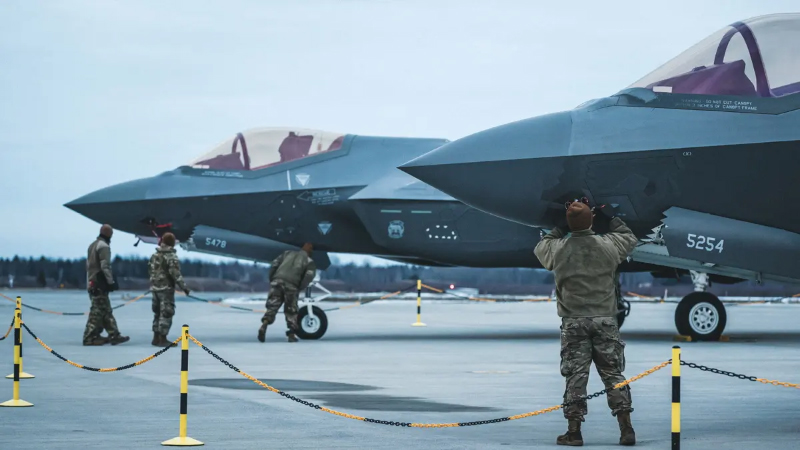
First, a massive reduction in conventional forces stationed within NATO. The Pentagon is not only mulling the withdrawal from key hub bases in "uncooperative" nations like Germany and Spain—relocating some troops to countries like Poland and Romania or pulling them directly back to the homeland—but has also begun hollowing out NATO's eastern flank by simply not replacing rotating units. For instance, the withdrawal of multi-functional reconnaissance and reaction forces, such as the 2nd Infantry Brigade Combat Team of the 101st Airborne Division, will directly drain NATO's reserve of initial intervention forces, severely undermining its rapid reaction capabilities on the European continent.
Second, systematically downgrading intelligence sharing and access to C4ISR systems for European allies. This includes deliberately dulling the frequency of space-based early warning data transmitted to NATO's joint command center, delaying technical support for theater-level cloud systems and tactical data links, and reducing strategic transport support by cutting funding for US joint logistics support systems in Europe. No matter what specific measures are taken, they will paralyze Europe's early warning radar network and emergency response mechanisms in the short term, and directly freeze NATO's large-scale maneuver expedition capabilities. The transport and inventory of consumable parts, ammunition, and fuel for Europe's heavy armored forces will also descend into chaos, severely undermining Europe's ability to respond to crises.
Third, lowering the technological level of US defense exports to Europe. In February 2026, the Trump administration signed Executive Order 14383, officially launching the "America First Arms Transfer Strategy." Unprecedentedly, the Pentagon placed the Defense Security Cooperation Agency (DSCA), which handles arms sales, under the supervision of the Under Secretary of Defense for Acquisition and Sustainment. This signals a complete departure from the goal of enhancing allied joint combat power; instead, arms sales to allies have been reduced to a tool for extracting funds to feed back into the US domestic military-industrial capacity. Under the guidance of this strategy, high-end equipment exported to Europe will undergo strict performance downgrades to ensure absolute technological generational gaps in favor of the US military, justified by the rationale that "one day they might no longer be allies."
In summary, the rupture of transatlantic relations has evolved from mere political bickering into a substantive decoupling of military systems. While the shell of NATO may barely survive under the reluctant maintenance of legal provisions, its core—as the world's most powerful military alliance—is being gradually hollowed out by America's active retreat and technological blockades, driven by a narrow hegemonic logic.
Author: Wang Siyu, Assistant Research Professor at the Shanghai Academy of Global Governance and Area Studies, Shanghai International Studies University.
Source: World Affairs, Issue 9, 2026.
Translated by Zhai Ziyun